How it’s made
Tà Yin is the oldest form of 1:1 reproduction we have — older than printing, older than the woodblock. Nothing is drawn, traced or printed. The image is beaten out of the brick itself.
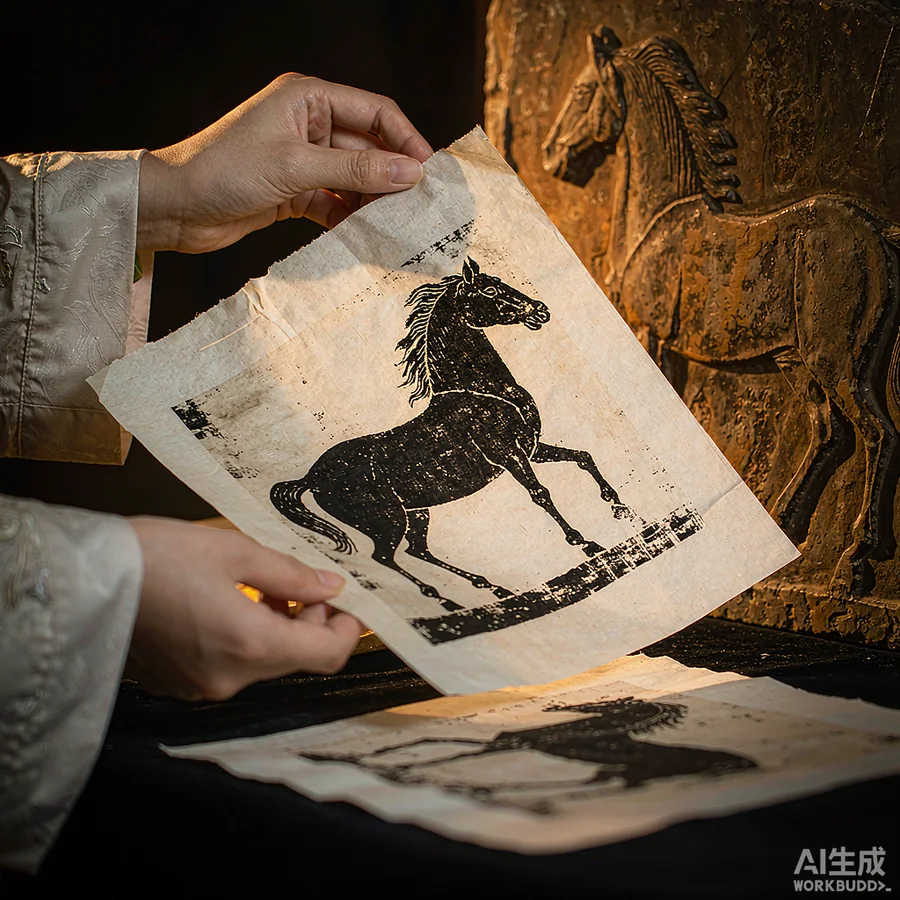
We start from an original Han Dynasty brick relief — a horse, a pair of fish, a phoenix, a cloud pattern. Each carries a meaning that is two thousand years old.
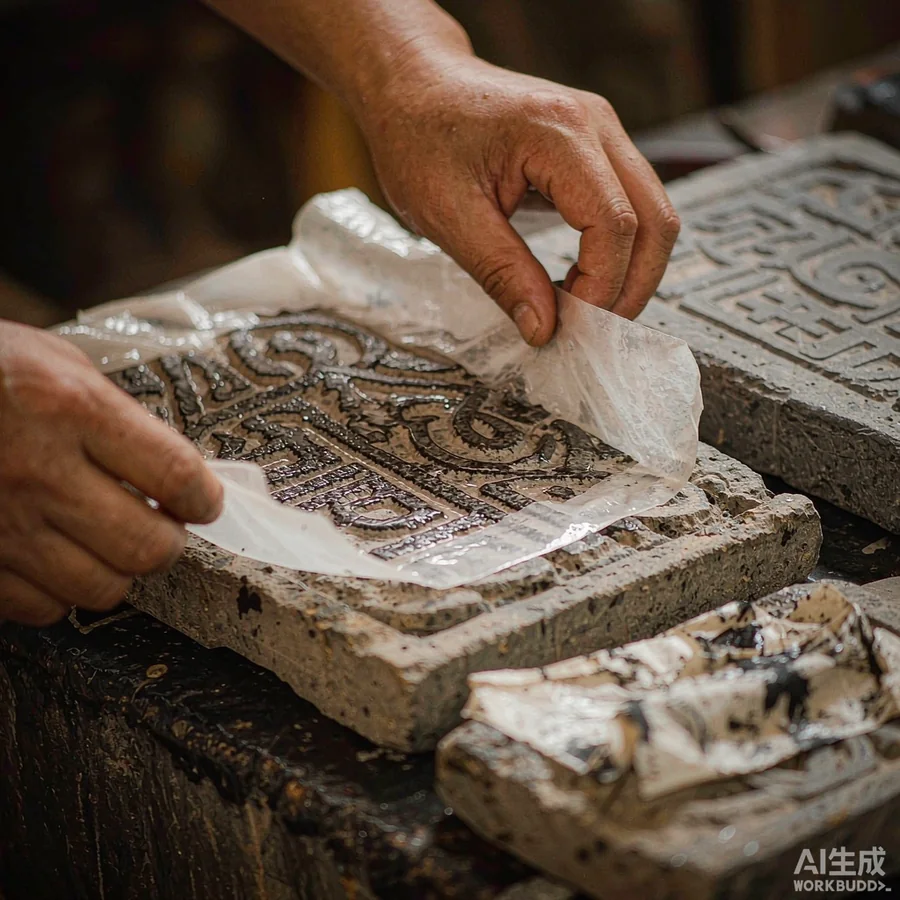
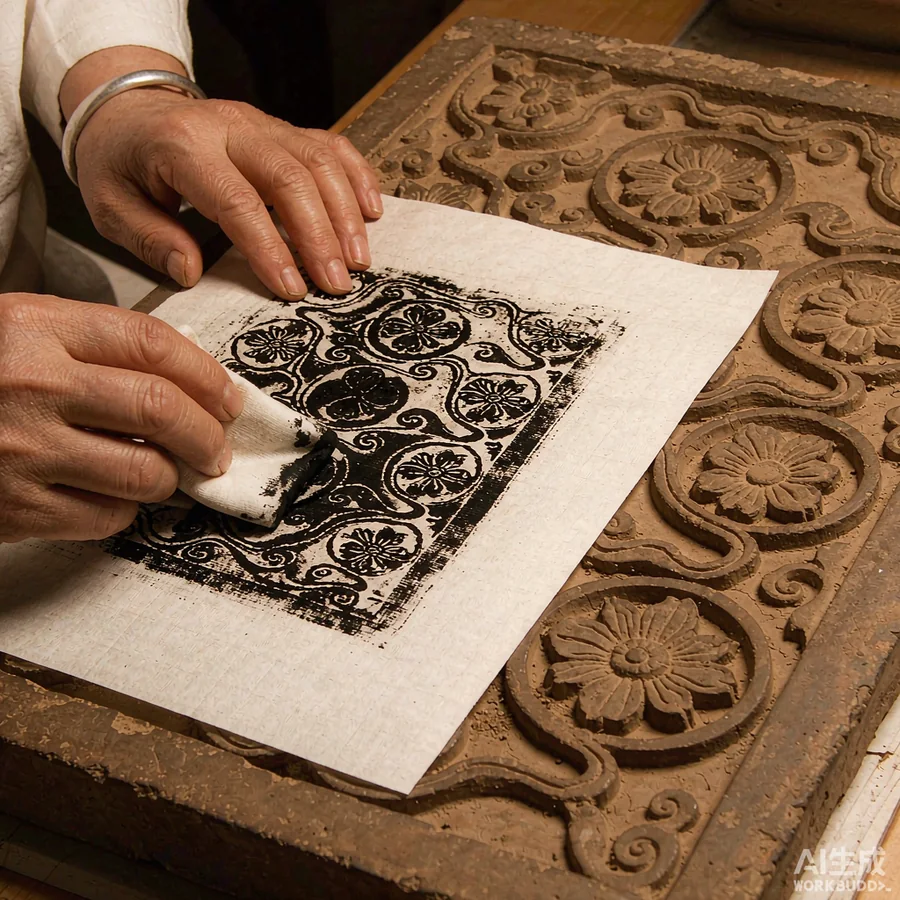
Aged Xuan paper is wetted and pressed onto the carved surface, so it sinks into every cut and hollow of the relief.
Mineral ink is tamped on with a silk-wrapped pad. Pressure is everything: too light and the image stays pale, too hard and the paper tears.
While still damp, the paper is lifted away. The raised parts of the brick stayed pale; the cut lines took the ink. The image appears — reversed, exact, one of a kind.
Each sheet is dried flat, inspected by hand, and given its own creation number. Natural variation is kept — it is the record of the press.
Your seal is carved, pressed once onto your artwork, then its corner is cut so it can never be used again. The whole thing is filmed.
A press is not a print. How damp the paper is, how hard the pad comes down, how the fibre lies — all of it changes the sheet. Ink density shifts across the surface, the paper feathers at the edges, the hand-carved stone leaves its own marks.
We do not correct these. They are the evidence that a person made it.
Made slowly, kept for a long time.
Everything else in the room was printed in a minute. This was not.
Aged Xuan paper, chosen for how it takes ink and how it holds up over decades.
Pigment ground from stone, not dye. It does not fade the way modern inks do.
One creation number, filed in the public archive. You can look it up at any time.